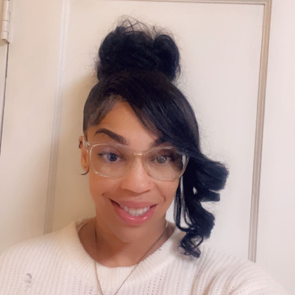
This blog post was adapted from the keynote address by Deputy Executive Director, Clarissa Espinoza, at the 2025 State of Sexual Violence Response in New York City Conference.
Shifting Landscapes
When we met at our State of Sexual Violence Response Conference in 2024 for the very first time, it was just one week after the federal election—a moment filled with uncertainty, reflection, and resolve. Our 2025 conference, one year later, followed our very own New York City mayoral election.
This year felt different; it felt like the beginning of something new. There was a shift in tone, a renewed sense of hope, and a deeper commitment to community-centered leadership.
Our newly elected Mayor has spoken about building a safer, more equitable city—one grounded in prevention, healing, and accountability. While we know hope must be paired with action, there is something meaningful about leadership that understands safety is not a privilege—it is a right.
At the same time, we cannot ignore what is happening federally: shifts in funding priorities and policy protections to shifts in the national tone around gender, justice, and bodily autonomy. These changes ripple through our work every single day.
As we look forward with hope here in New York City, we are resolute, knowing that our advocacy, organizing, and care must meet both local opportunities and national challenges.
My Journey in the Sexual Violence Sector
Before diving deeper, I’ll share a bit about my journey. Being a proud daughter of immigrants and a woman of color deeply shapes how I see and how I show up for this work. I did not start as the Deputy Executive Director. I did not start with statewide responsibilities. I started my career in Westchester County, a place some people insist on calling “upstate”, and others swear is just the Hudson Valley, but for me, it was home for nearly a decade.
I started as a victim advocate, answering helpline calls at 2 AM, responding to hospital calls, and submitting OVS applications so survivors could get HIV-PEP covered without having to fight for access to safety right after surviving harm.
Then I moved into the Child Advocacy Center, working on a multi-disciplinary team and supporting families navigating detectives, ACS, prosecutors, therapists—every system imaginable.
Then I moved into community engagement, where I recruited and trained volunteers to become New York State-certified rape crisis counselors. In that process, it became clear that our curriculum didn’t meet the needs of community members who wanted to volunteer. Rather, it was designed with a “standard volunteer” in mind who didn’t reflect the cultures, languages, or lived experiences of the communities we served.
So, we translated it into Spanish to meet people where they were. Then we realized we were still leaving people behind—deaf and hard-of-hearing survivors. In response, we added a text and chat option to our 24/7 helpline, long before it was standard practice or showed up in national toolkits.
Later, my mentor in this work (shout out to Michelle James!) believed I could manage a rape crisis center and a SAFE training site at the same time. I collaborated to establish a Domestic Violence High-Risk Team because we saw exactly what was at stake, and we knew systems needed to move faster.
Then I moved into a statewide role, coordinating PREA services across New York and working closely with NYSDOCCS to ensure incarcerated survivors received real access to advocacy.
As the Director of Programs at The Alliance, I oversaw our general training, Enough is Enough (EiE) statewide training and technical assistance, SAFE–TI program, youth and nightlife prevention programming, and the strategy and systems change work that connects our entire ecosystem.
I am now proud to step into a new role to become The Alliance’s Deputy Executive Director, a role that feels like a continuation of everything that has shaped me—community-centered leadership, systems change grounded in lived experience, and the belief that safety and dignity are rights, not privileges.
This next chapter at The Alliance is deeply personal: it’s about translating the lessons my parents, my community, and my work have taught me into sustainable structures that strengthen survivors’ experiences and the systems meant to serve them. It’s an opportunity to lead with integrity, collaboration, and a commitment to building what does not exist but can exist for all survivors.
Every step of this journey—every call, every exam, every training, every policy conversation—has shaped how I show up today.
I know the struggles of advocates. I’m aware of the pressure on SAFE examiners. I notice the shortcomings of prevention curricula not made for diverse communities. I understand the weight of budgets and RFPs. I know the effort it takes to ensure incarcerated survivors and many others aren’t forgotten.
These experiences fuel my commitment to building solutions that are tangible, accessible, and realistic for the people doing this work every day. After juggling helplines, hospital calls, budgets, training sites, statewide PREA work—stepping into systems change feels weirdly relaxing.
Our Shared Mission to End Sexual Violence in New York City and State
This brings me to why I believe so deeply in the mission of The Alliance. At The Alliance, our vision is bold: a city and state where every survivor—no matter their identity, language, or circumstances—can access care that is compassionate, coordinated, and just.
Over the past year, we’ve turned that vision into action:
• Securing additional funding for Rape Crisis Programs statewide
• The major policy milestone of the 2027 SAFE mandate
• The launch of the NYC Sexual Violence Prevention Mapping Project
• The opening of a new Rape Crisis Program in Brooklyn
• And taking our model abroad to Moldova
These accomplishments are grounded in real numbers. Numbers
made possible by a team that is small, but truly a powerhouse. This was done by our team of 8—a team that shows up every day with heart, grit, creativity, and an unwavering commitment to survivors and community.
Last year, The Alliance trained: 650 community members, 236 healthcare professionals, 461 nightlife professionals, 169 young people as prevention leaders, and 1210 college students.
It was with that spirit in mind that we embarked on our 2025 State of Sexual Violence Response Conference, which reflected both the complexity of our work and the collaboration it takes to advance it. The conversations we had throughout the day returned us to one truth: We are strongest when we operate as one coordinated system—never as separate programs.
That truth is exactly why convening matters. As we celebrated our achievements as a sector, we also stood at a defining moment in our evolution. Our collective work, advocacy, partnerships, and systems-building have made something increasingly clear: We, the Alliance, have both the capacity and the credibility—and we are ready to step into the role of serving as the statewide coalition.
This is not just an organizational shift, this is a recognition of what’s possible when local leadership guides statewide impact —when the lessons we’ve learned here in New York City shape a more unified, survivor-centered response across New York State, and when the lessons from every corner of this state strengthen and inform the work we do across the entirety of New York.
As I move forward in the role of Deputy Executive Director, and The Alliance takes on a statewide role, I hold two things: gratitude for how far we’ve come and courage for how far we’re willing to go.
Our impact isn’t measured only by the policies we pass, but by the programs we strengthen, the partnerships we build, and the systems we transform to uphold survivors’ rights to safety, dignity, and justice.
So, welcome to the next chapter of our collective journey. Let’s get started.